

Become a Super Rider | Interview with Aaron Lutze
|
|
Time to read 8 min
|
|
Time to read 8 min
Imagine waking up and recording a podcast with a rising CEO in the outdoor industry. Packing up your camera gear to film a bike skills video for your growing YouTube channel. Jumping on a call to talk content strategy with your latest brand partner. Coordinating your next big trip overseas. Then picking up your two kids and shuttling them from school to soccer to the mountain bike park. And then if you’re lucky - squeezing in a ride yourself.
That’s a day in the life of Aaron Lutze, our newest Kitworks ambassador. We sit down with him to explore his love of riding, his passion for helping new riders build confidence and skill, and his evolving approach to managing his packed schedule with his family’s increasing number of activities, and the garage full of gear that comes with it.
Aaron: You know, that's a great question because I got pulled into it by my friends in high school [in Wisconsin] and I was not actually that athletic in middle school or high school. I was the short kid and I was not really competitive in any sports whatsoever. Mountain biking, for me, was like a cool new sport, especially in like the late 90s.
Aaron: Trials is basically like rock climbing on a mountain bike. It's a different set of techniques that can make you a better mountain biker, but it also allows you to do stuff that looks like magic.
I had a set of pallets in my parents' basement and I would spend all winter learning how to balance and hop and ride over stuff. So, I really used the Wisconsin winters to hone my skills as a trials rider. And that's really what kind of got me fully immersed in mountain biking.
Aaron: I was making what originally started off as a VHS series and and by the third or fourth film, we moved into DVD. I was going around and filming all these riders that I was friends with. So, I was already producing videos way back in the VHS and DVD era. Then I ended up getting a real job, and I'd always wanted to keep filming and keep producing my own stuff.
But you know, the job that I had, I worked for Red Bull and they had a full video production team. I had the ability to keep producing videos…about all kinds of different athletes, not just bike athletes. But always in the back of my head, I was kind of like, I want to make my videos again.
Aaron: So much of the stuff that I talk about on my channel is to help other riders become confident. You know, the way that most people learn mountain biking is that they get dragged to the top of a hill by their friends. They put this helmet on their head. They give them a bicycle and they say, "Follow me." And then that person tries to learn a pretty advanced skill while they're moving quickly in a high consequence environment. And that sounds like the worst idea ever.
And so the large majority of - if not all of my videos - are about taking the riders back down to a starting point that's like, "Here's flat ground. Here's a bike. Here's what you can do on flat ground with that bike to give you a skill that you can have in your arsenal when you go ride that's going to help you maintain a higher level of control, conquer difficult obstacles, understand how to read the trail and respond and react to it and just ride with more confidence.”
When you ride with confidence, you ride better and safer. And so by giving the viewers these extra levels of confidence and and skill, hopefully we're making safer riders. Hopefully those people can actually enjoy riding because I can't imagine there's anything enjoyable about that first mountain bike ride where you're just hanging on for dear life. So I guess my big idea is to try to prevent that from happening, and give people the skills before they get launched down the mountain.
Aaron: I originally had both kids on a 20-inch mountain bike. It was the best bike for them to just start riding trails, had really wide tires on it so that they could conquer some technical terrain. But it was pretty clear to me that she had outgrown that size of the bike and she needed a proper full suspension bike. You know, it's like once the kids start showing interest in something, you want to help them double down as much as you possibly can.
So, it was really about setting her up with a bike that fit her, but also that she could excel on, and now that means we can ride even more advanced trails and help her progress even faster. So, that bike was a really big unlock for her. There have been some adjustments that we've had to make to get her comfortable on it, but I know that over the course of this next year, she's going to have just massive progression on that bike, and I'm really excited for that.
Aaron: We actually just moved into this place [outside Portland] that's right next to my favorite trails to ride. I have always wanted to be able to ride bikes, proper mountain bikes with my kids. And over this past summer, I got my wish. I got them to actually come out and ride bikes with me on proper mountain bike trails.
You know, this entire time I've been waiting for them to hopefully show a little bit of interest in riding bikes and we just never really got there. And then I discovered a trail that was perfect for them to learn on. Then we went to a bike park and they got lots of reps and lots of practice and they started getting good and now they're excited about riding bikes which is awesome.
…except that it complicates everything because now my garage is loaded with extra bikes, extra bike parts and bike stuff that isn't mine. And I've never had that before in my entire life. The garage was always my domain and it was just all my bike stuff. And so now having to deal with other people's bike stuff is a welcome, but unexpected change.
Aaron: I just focus on being intentional about when you're going to have those windows and making sure that you stick to those windows. I'm always trying to make time for people and work. And I feel like a lot of times I will give up a riding window in order to do that.
And one of the things that I've been a little bit more forceful about recently is saving those windows and making sure that actually I can ride. We do a Wednesday night ride with all of my friends where we get together at this place called Rocky Point and we just all ride together and we have a burrito afterwards and then we all go back to our lives. And in past years, I would maybe make that ride two, three times a season. And when I finally put it on the calendar and said, "No, I'm going to - unless there's something I absolutely have to go to, I am going to make sure that I can be there for this ride." That was the game changer.
Having intentional time with your friends, intentional time riding, like really carving that time out made such an impact on my year and my mental health and on my riding, too. I mean, just that level of consistency was so important in so many different ways. I'm really glad that I did that and I don't think I'm ever going to let that one go.
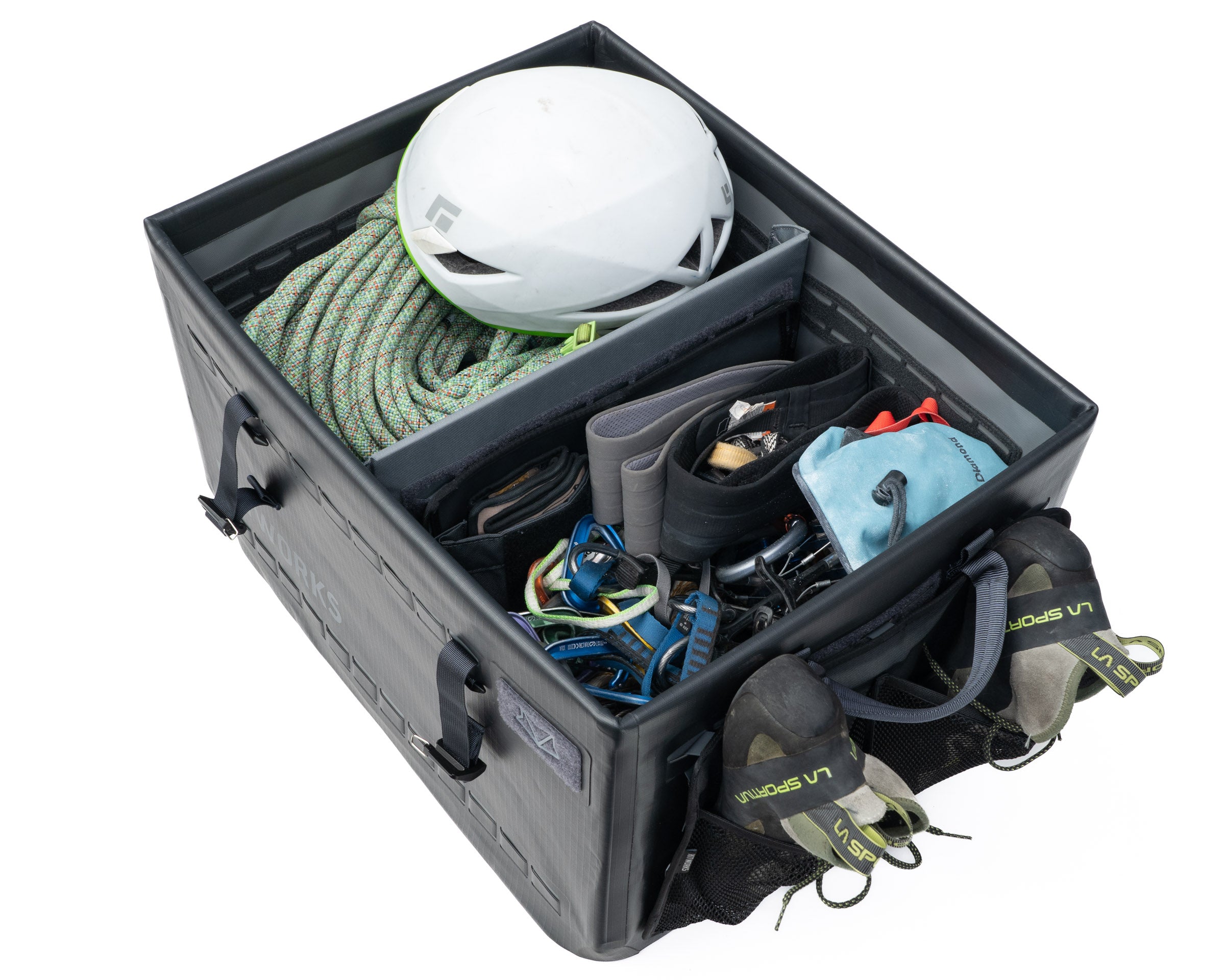
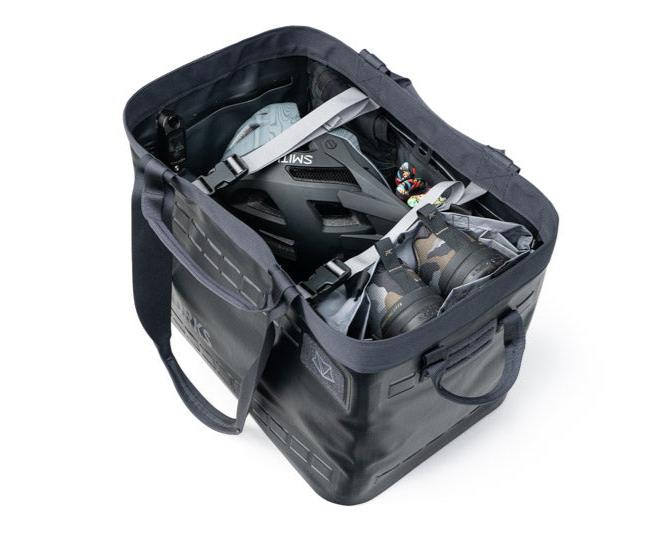
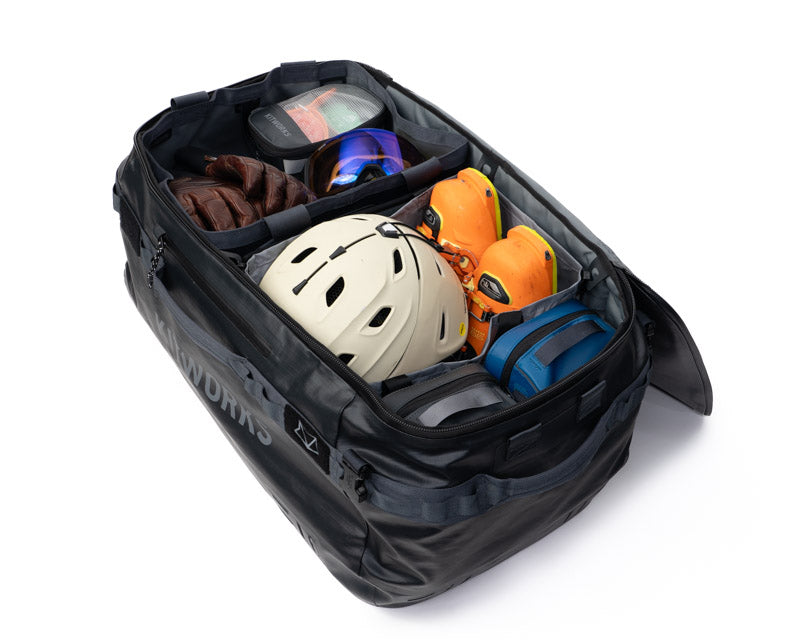
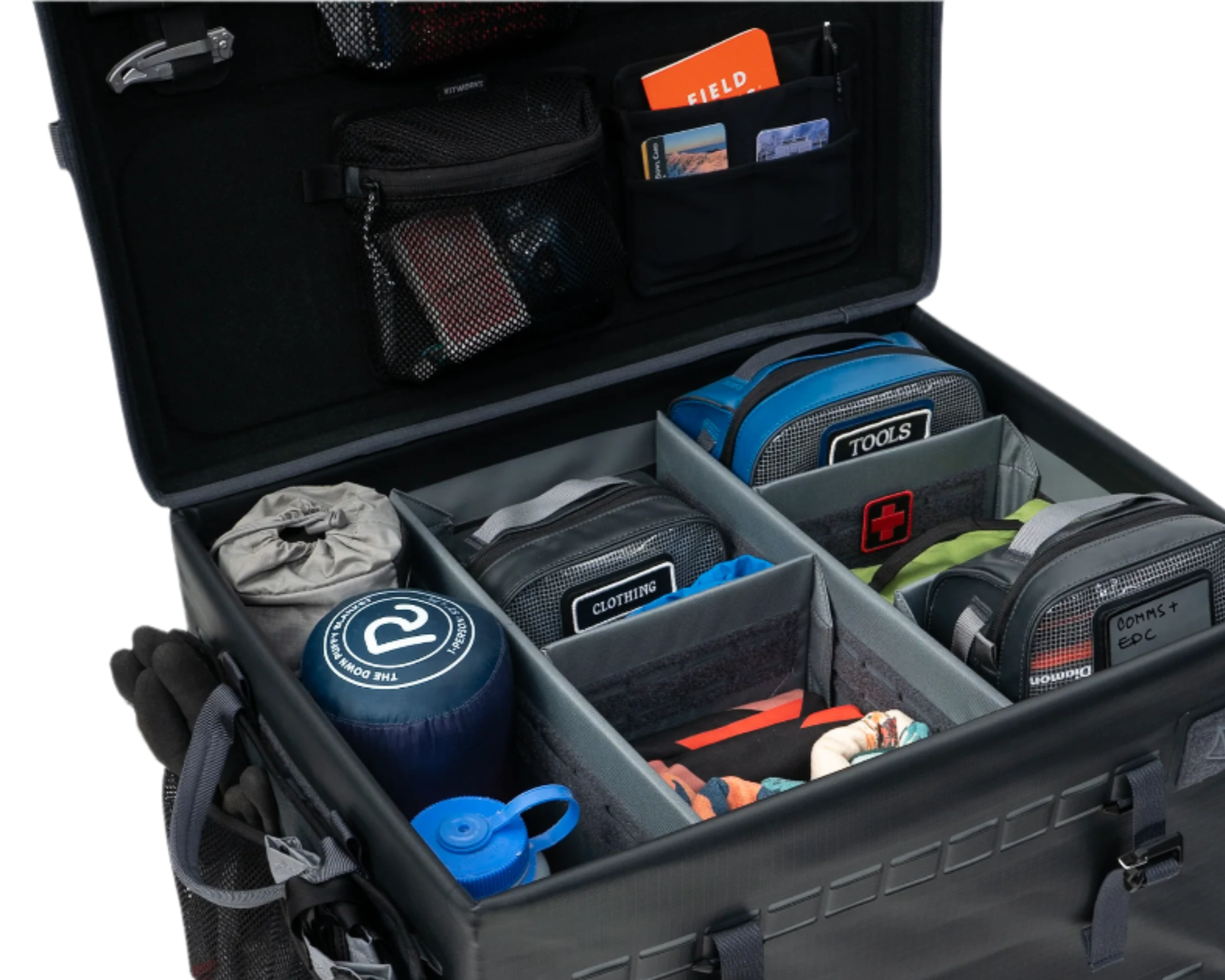
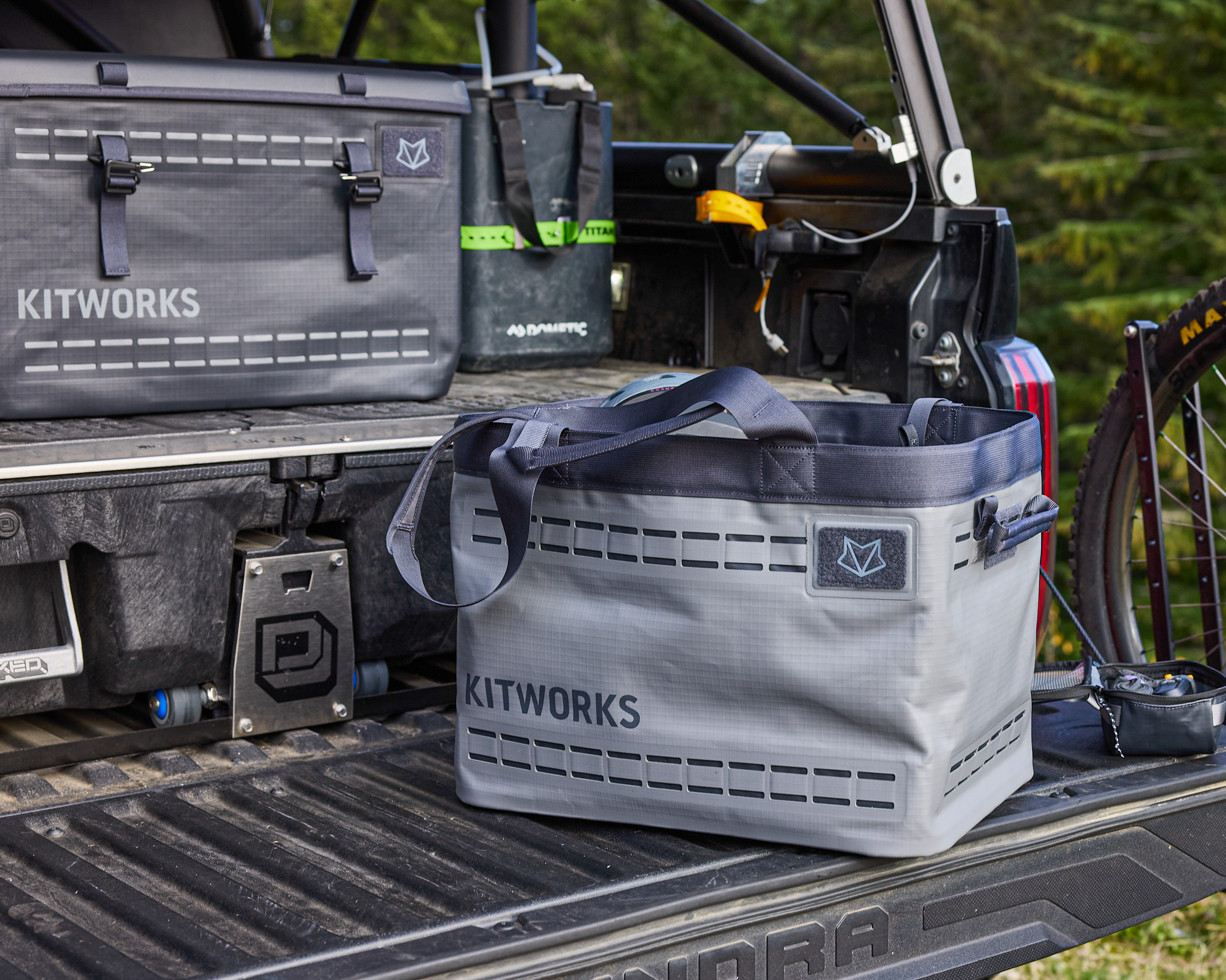
Aaron: When I first saw Kitworks, it instantly clicked for me, "Oh, that this is like a photo block but for all my gear. This is what I need." And so the first thing that I got my hands on was the 55 L tote. The Gear Tote basically solved for me one of the biggest problems, which was me with an arm full of stuff carrying out to my truck and then dumping it in the passenger seat. Then I would get to the trail and I'd be shuffling through that mountain of pads and hoodies and snacks and a backpack to reorder everything, put it together, and then go out for the ride.
And then I'd get done with the ride and I'd be a sweaty mess and I would just put everything in a pile in my truck again, and there'd be this disaster in the inside of my truck. When I switched to that gear tote everything clicked into place.
Aaron: So I'm thinking about, okay, my shoes are going to be dusty or muddy after a ride, so they definitely need to go in the wet dirty bag. That's the perfect place to put that. Thinking about the mesh pocket in terms of, oh, I can fit all of my snacks and stuff in there. I can be thinking about how gear cubes play into it…
And I feel like any other mountain biker is going to look at this [setup] and say, “oh yeah, that's exactly where my shoes go. That's exactly where my helmet goes. My gloves go in this pocket right here.” It's not too difficult of a leap to see how these pieces fit together for a mountain biker.
I've perfected this setup over riding all summer and using this on a near daily basis. And as a mountain biker, if you want to have a proper setup…you don't have to start from scratch. You can just jump right in and have everything perfectly dialed.
Aaron: Truthfully, I just need to breathe fresh air and allow everything to reset. And being outside riding does that for me. It helps me get in control of everything and just be okay. And so I use riding as a way to get myself back on track. And that feeling of motion, of freedom, of flow just resets the nervous system and allows me to take on a big task or deal with a difficult situation or just make it through day-to-day. I feel like my level of frustration and stress always drops down to zero most of the time when I'm riding.
Nate Helming
Based in Bend, Oregon, Nate spends as much time outside as possible: testing gear, exploring trails in all seasons and helping inspire the Kitworks community for better organized adventures.


