

On Not Seeking Perfection | Interview with Hank Stowers
|
|
Time to read 8 min
|
|
Time to read 8 min
Most skiers dream of living at the mountain. Fresh tracks. The most ski days. No commute. Hank Stowers instead chose Portland, a city that is ninety minutes from Mount Hood but importantly full of coffee shops, bookstores, great food and city life.
That choice says something.
Hank is a professional freeride skier, but more than that, they’re an explorer who thrives on variety. They’ve built their life in a way that makes room for the mountains and a life beyond the mountains too.
We sat down with Hank to talk about where that curiosity comes from, how they’ve designed a life around this choice, and the systems they rely on to stay ready for whatever the next opportunity demands, whether that’s a quick dash to Hood or a new line farther afield.
Hank: Yeah. So I'm a byproduct of skiing. Honestly, my parents met as ski instructors at a little resort called Purgatory in Southwest Colorado. My mom was working as a night shift nurse and skiing during the day. My dad had a small construction business and was also a ski instructor on the side.
I started skiing when I was 2 years old. My brother and I were really lucky to be awarded scholarships to our local freestyle ski program from a very young age.
Hank: [When I was young] we were able to slide into the mogul training program at no cost and get really integrated into the sport with some impressive figures. My mogul coach growing up, his brother was the head coach of the U.S. Ski Team. So through that connection, every year we would go do mogul camps with the Olympic team. I got a quick introduction to the most elite level of skiing. It lit a fire in me early...seeing people ski at that level.
But I was always a bit of the miscreant of the mogul program. My younger brother was hiking the jump, doing drills, and I was sneaking off and getting in trouble because I wanted to ski in the trees and find powder stashes.
I have a natural draw to exploration on skis. I’m a curious skier. I love scouting new zones even more than the competitive or extreme aspect of it. Going into new areas and finding different ways to ski the mountain feels like a scavenger hunt that’s open and free-form. That was my initial draw.
After graduating out of mogul skiing, I transitioned into slopestyle [in the terrain park] and for quite a few years I was really focused on that. When I was 18 or 19, I was competing at a high level and shooting video for known production companies. I was passionate about it.
But I always felt like being inside a man-made terrain park was one degree short of the full experience of skiing.
Hank: While I was in college, I started watching freeride competitions and got hooked. Class would be at 8 a.m., and I’d be up at 5:00 a.m. watching competitions on Euro time.
Freestyle skiing is kind of an umbrella term. It encompasses two major genres. One is freestyle mogul skiing: a mogul course with two jumps. It’s a very regimented competition. The judging criteria feels more similar to gymnastics or ballet. It’s very particular. It’s about perfection.
Then there’s slopestyle: halfpipe, big air, rail jams, anything in the terrain park. It’s more free-form than moguls, but it’s still judged and still based on execution and precision.
Freeride is finding a big, open, unaltered face of a mountain and choosing the most creative, potentially high-stakes technical route down it, ideally throwing in backflips and 360s along the way.
It’s much less regimented in competition. It’s more open to interpretation and harder to judge for that reason. There’s no type of skiing more open to the athlete than freeride.
Hank: I started seriously making YouTube videos last season, so this is only my second season really focusing on it. For a couple years before that, I was making short films: narrative-structured films focused on high-quality cinematography, storytelling, and soundtrack. I really enjoyed doing that. And YouTube was the natural place for those videos to land because we wanted to get them out there for free and have people see them.
As I started to familiarize myself with the YouTube landscape, I saw other skiers, and people outside the snow sports community creating content that felt approachable. Nikolai Schirmer’s an inspiration for sure. Cody Townsend. There are people in the parkour community or Magnus Midtbø in climbing. They do a good job of being the olive branch from the general population on the internet to their sport. They’re ambassadors.
I think it’s a cool opportunity to help craft the perception of adventure sports to the public. YouTube lets you open the door for someone who’s just curious. I try to approach it authentically because so much of skiing media highlights picture-perfect experiences.
For most people, skiing is about the people you’re with. The joy, the challenge, the frustration, the triumph. It’s personal. I want to create media that reflects that. POV content, showing what it feels like through my perspective, is kind of my bread and butter.
I love when a video does well. But my favorite part is when somebody says, “I saw you doing that.” It’s this giant internet space, but it also feels like a small ski town online.
Hank: When I graduated, I wanted to get somewhere with excellent snowpack but a little lower avalanche risk. I found myself in the Pacific Northwest.
I wouldn’t trade the hour-and-a-half commute for the convenience of a closer ski area because I like being able to connect different aspects of my life and not feel like I have to negotiate between them.
I like the drive. It’s meditative. I’ll listen to an album or an audiobook, recently Margaret Atwood, and then I’m there.
The Mount Hood scene is strong. It doesn’t feel like you’re leaving one world for another. It feels like there’s a culture tunnel between the mountain and Portland.
Hank: The main thing is setting my life up for efficiency. I have a flexible remote job. I can work from home or from the mountain. Once it’s November, I’m ready to ski at a moment’s notice.
The Pacific Northwest climate is touch-and-go. It might be raining in the morning and snow six inches two hours later. You have to be ready to act quickly.
I also value variety. I might not ski as many days as a Red Bull helmet–wearing pro, and I’m okay with that. I’m passionate about climbing, reading, surfing, city life. If that means ten fewer ski days a year, that meets my needs.
You adopt a willingness to seek the experience rather than a defined result. I’ll sometimes go up to the mountain and ski for two hours at night in the rain, and that’s the time I get that day. It’s easy to chase perfection. But when you shift your mindset to the full experience, it’s not just about the perfect pow turn. Maybe the terrain wasn’t ideal, but I went to a great coffee shop that morning and spent time with friends.
When you stop seeking perfection, you get more overall experience. You get to enjoy more.
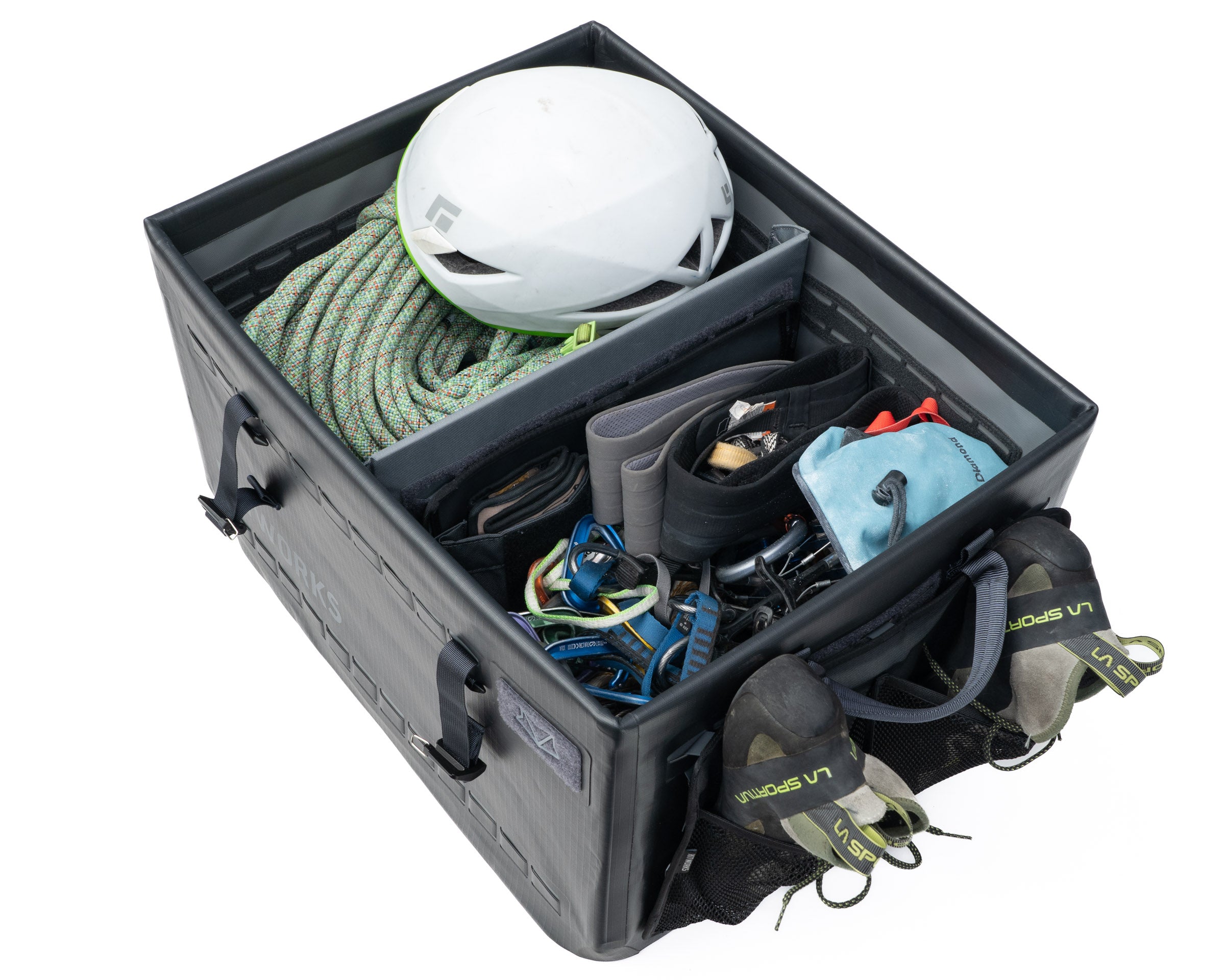
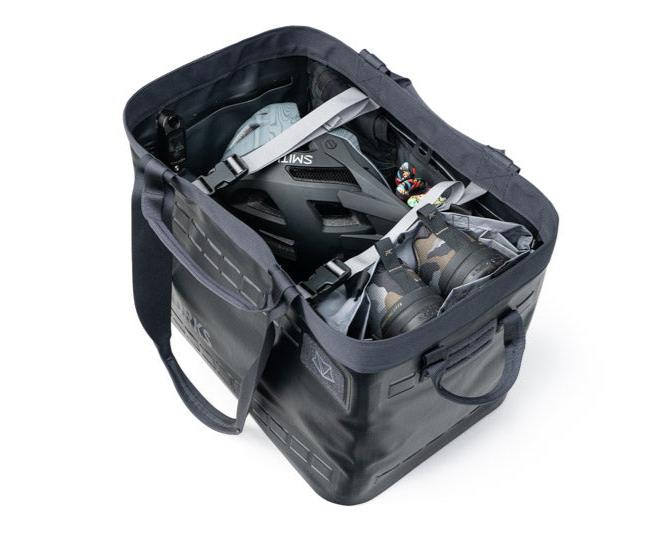
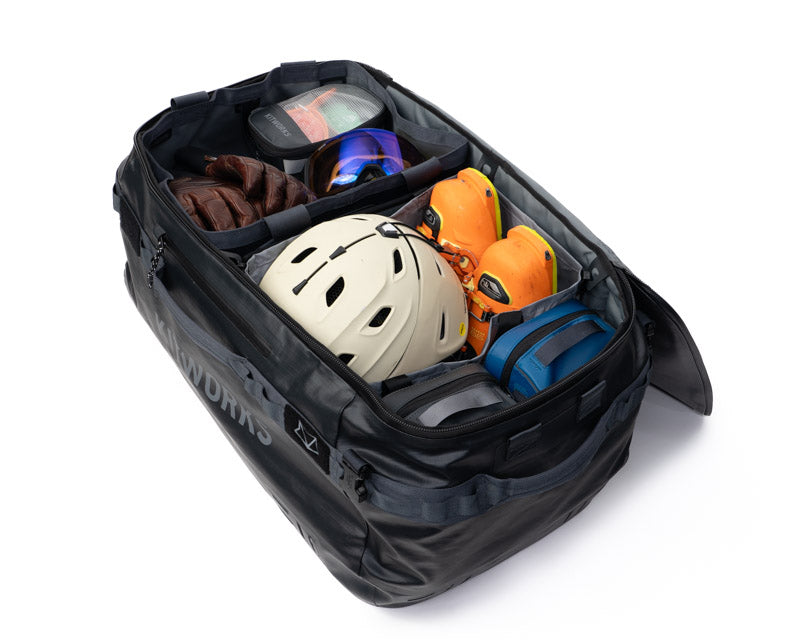
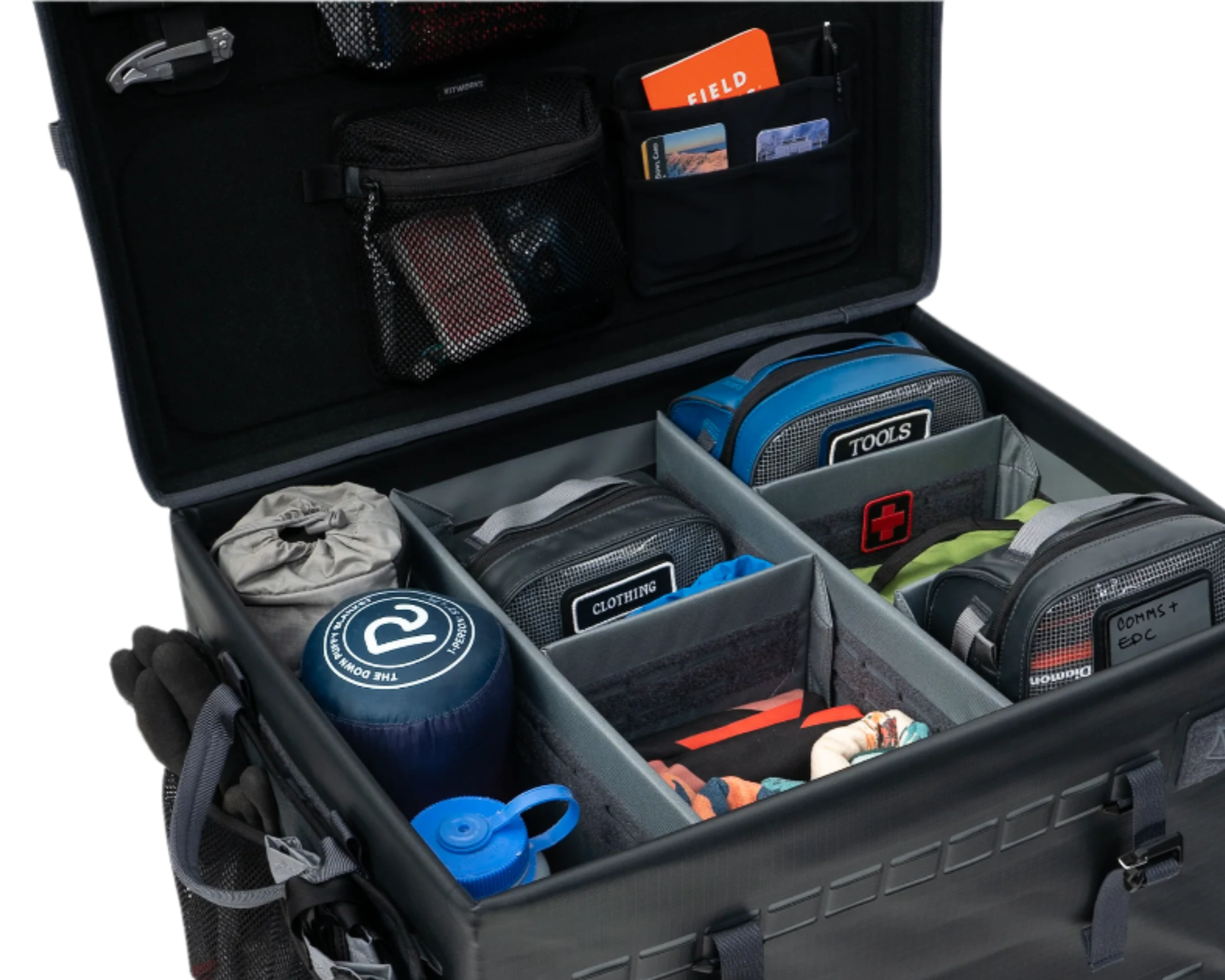
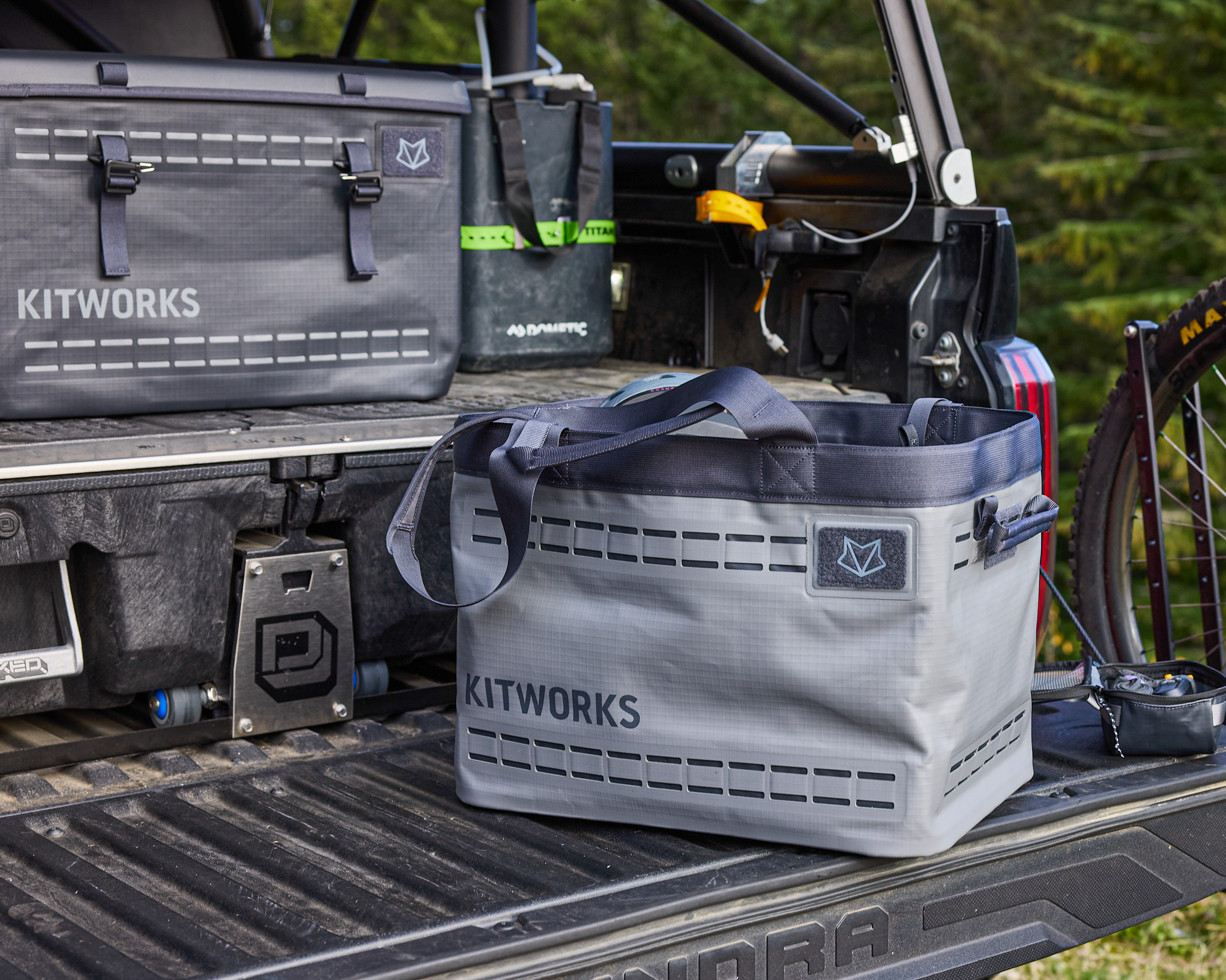
Hank: People ask why I bring so much stuff. The reason is that I just grab everything. I wake up, get my gear box, get my gear tote, get my skis, get my poles, grab a cup of coffee, and go. It takes me about 45 seconds to get out the door. That lets me show up without knowing exactly what I’m getting into.
When you’re driving to the mountain, you can’t just go back home for a pit stop. If I get there, take three laps at the resort, and it’s not skiing that well, I can hop in my car and drive somewhere else and have what I need to get into the backcountry immediately. I can set up layers for a powder day or a spring day without packing different bags for different conditions.
Having a system that’s super efficient is like a cheat code. There are two ways to prepare to ski: pack for what you expect, or pack for what you don’t expect. I defer to packing for what I don’t expect. I’ve had so many days that scored in ways I didn’t anticipate, and I needed different gear than I thought I would.
My gear box is my all-skiing container. Everything I might need at the resort goes in one box. My backcountry stuff stays separate because it requires more direct attention. You have to make sure you have backup batteries, that nothing gets left at home. That gear can be lifesaving. So I keep it in a dedicated bag, that’s my private, protected bag.
Hank: I’m going to think about that for a second. I think as human beings it’s easy to get detached from nature...to think of ourselves as separate and get caught up in very valid, very human distractions.
When I’m in the mountains, I feel part of the environment. That lack of separation feels playful. It feels joyful. It lets me explore the world in a way that feels natural to both my mind and my body. I don’t feel like I have to compartmentalize parts of myself. It’s a raw experience, not something you have to overthink.
The mountains present puzzles: conditions, terrain, challenges that light up my interest and excitement. I love thinking about those pieces. I love exploring new areas and finding ways to challenge my body and my mind.
You can access that anywhere in nature, but the mountains have a demanding presence. They’re these giants you can immerse yourself in. They force a level of respect and focus you can’t avoid. If you’re going to do serious skiing, you have to set everything else at the door.
Like I said earlier, I’m really curious. It ignites my inner child, going into the forest and looking for a stack of pillows to fly down on skis. It feels very primal.
Nate Helming
Based in Bend, Oregon, Nate spends as much time outside as possible: testing gear, exploring trails in all seasons and helping inspire the Kitworks community for better organized adventures.


